By Andrés León, Head of Client Partnerships – Americas
The game industry lost over 40,000 jobs in the last two years. Studios were shuttered. Projects cancelled mid-production. Budgets evaporated overnight.
The common narrative blames market conditions and rising costs. But there's a quieter, more persistent force that rarely gets named directly: operational drag. This is the cumulative cost of administrative friction, misaligned resources, and the cognitive load of managing people instead of making things.
Studios didn't fail because they lacked talent. They failed because they couldn't focus their talent on what actually mattered.
The Hidden Cost of Running a Studio
Ask any producer where their time goes. A significant portion of every day is consumed by work that has nothing to do with making games: status updates that could be surfaced automatically, resource decisions made on gut feel, coordination overhead that multiplies with every external partner.
The friction is coming from the way production information moves through a studio.
A concept artist spending 30% of their day on administrative tasks isn't working at full capacity. A development director who can't see the real-time health of a project can't make good decisions. The industry tolerated this for decades because when budgets were large and timelines generous, you could afford the waste. That era is now over.
Operational Discipline Is What the Hollywood Model Actually Requires
The industry has talked for years about moving to project-based, Hollywood-style production: assemble the team, deliver the product, scale down, repeat. The logic is sound, but very few studios have managed to put it into practice effectively.
Hollywood works because the infrastructure underneath is extraordinarily disciplined. Standardized contracts, verified talent, shared protocols, clear chains of custody, and decades of institutional knowledge about what it takes to deliver on time.
Game development has lacked that infrastructure. Until now, the Hollywood model in games mostly meant accepting its benefits in theory while inheriting all the chaos in practice.
Operational discipline is what prevents the model from sliding into chaos.

What Streamframe Does
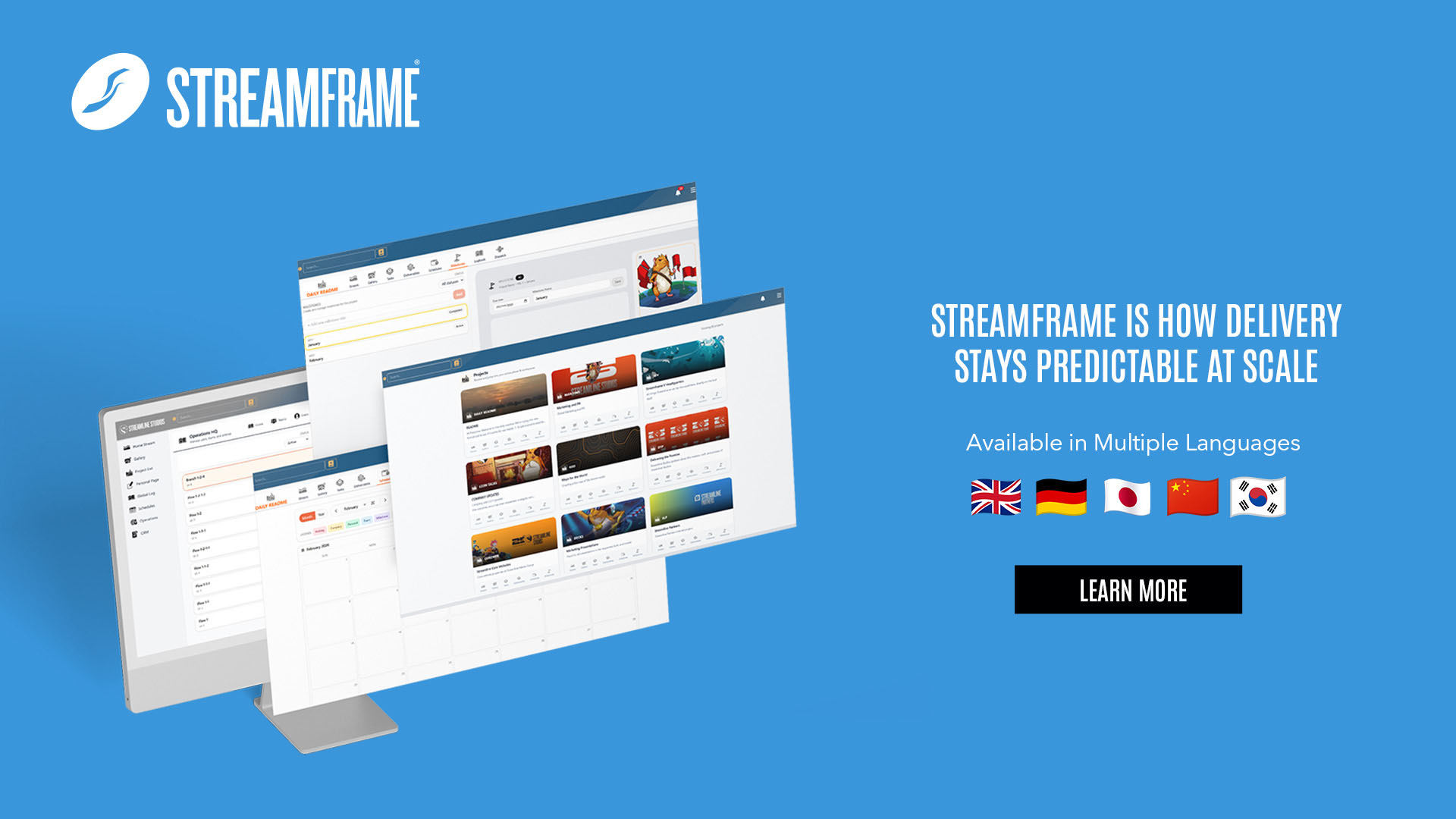
Over 25 years and hundreds of productions, Streamline tracked every project, every decision, every delay, every remedial action taken. That institutional knowledge is now the foundation of Streamframe, our orchestration system for game development.
Streamframe is not a talent marketplace. Not a HR platform. It's the operational layer that removes friction between the work that needs to get done and the people who can do it.
In practice, every project begins with a single master agreement. Streamline has standardized these agreements across our clients and partner network, which removes the need for studios to renegotiate structures every time a new collaborator is introduced. From the client’s perspective, the relationship remains simple: they work directly with Streamline as a single point of contact, while behind the scenes we assemble the right mix of partner companies and verified professionals from a network of more than 5,000 specialists to match the needs of the production.
Much of the operational complexity is absorbed by Streamframe, the production platform built on data collected across more than 25 years of comparable projects. Instead of teams spending time tracking progress, forecasting capacity, coordinating QC, or aggregating status reports, those signals are surfaced automatically. AI agents handle the routine coordination and data synthesis that typically consumes producers’ attention, allowing artists, directors, and production leads to focus on the work they are actually trained to do.
The result is a structure that scales with the needs of the project rather than the size of the studio. Teams can expand from five people to a hundred when production demands it, drawing from the partner network already integrated into the system. When the project concludes, the structure contracts just as easily—without the overhead of maintaining permanent capacity that is no longer needed.

The Real Promise: People Working in Their Genius
The most important thing we've learned building Streamframe is this:
AI does not replace people. AI enhances human genius by removing the mundane.
The industry's layoff cycle was triggered by failed management. Studios overcapitalized, built bloated structures, and when the market contracted, those structures were found lacking. The waste built into the system became unsustainable; AI only made the waste more evident.
AI should be used to build systems where people are never doing work beneath their capabilities. By absorbing routine coordination, tracking, and synthesis, it reduces the cognitive load on creative teams and allows them to focus on the work they are actually skilled at. At the same time, it gives organizations continuous visibility into the state of a project, so leadership can understand progress, risks, and resource needs in real time.
Andrés León is Head of Client Partnerships – Americas at Streamline Studios. Streamframe is currently onboarding select studio partners.